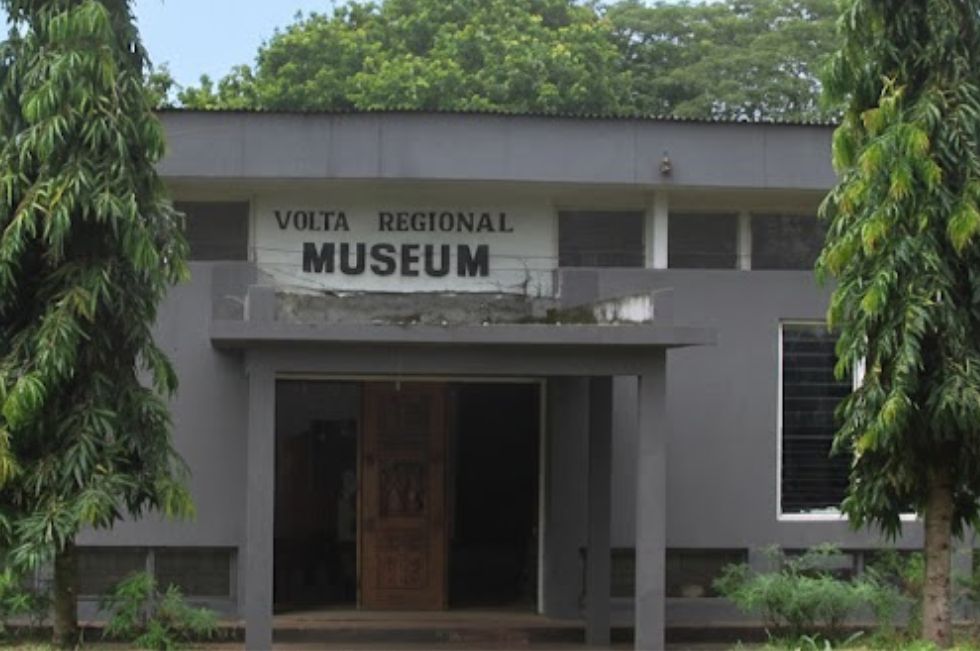
Volta Regional Museum, Ho
Located in the regional capital, the museum is managed by the Ghana Museums and Monuments Board (GMMB) and serves as an important centre for cultural education, research, and tourism.
History of the Museum
Before becoming a museum, the building originally housed the Office of the Volta Regional House of Chiefs. In 1967, the structure was sold to the Government of Ghana, paving the way for its conversion into a museum. The Volta Regional Museum officially opened to the public in 1973.
Over the years, the museum has played host to several important cultural and academic activities. In April 2014, it partnered with the Evangelical Presbyterian University College to organise the first memorial lecture honouring individuals who made significant contributions to the study and promotion of the Ewe language. Among those honoured were Ghanaian scholars Dr. Godfred Kportufe Agamah, Dr. Emmanuel Ablo, Professor Komla Amoaku, and German missionary Reverend Jakob Spieth.
In 2018, the German Ambassador to Ghana, Christoph Retzlaff, visited the museum and discussed initiatives aimed at rehabilitating heritage sites across the Volta Region.
Major renovation works on the museum were completed in 2021 after three years. The refurbishment was jointly funded by the German Government, which contributed €25,000, and the Ghana Museums and Monuments Board, which provided GH¢200,000. Following the renovations, the museum hosted a tourism development forum on September 4, 2021, organised by Tourism Aid Ghana.
Collections and Exhibits
The Volta Regional Museum houses a diverse collection of historical and cultural artifacts that reflect both local traditions and colonial influences. On display are items such as:
- The Chair of State used by the last German colonial governor
- Traditional wood carvings, pottery, and Kente textiles
- Masks, stools, and Asante shrines
- Musical instruments including drums
- Swords, stone relics, and earthenware cooking vessels
The museum also features exhibits highlighting the region’s ethnography, with artifacts from the periods of German Togoland and British colonial rule, alongside materials representing indigenous Ewe culture.
In addition, visitors can view paintings and sculptures created by artists from the Volta Region, blending contemporary expression with traditional themes.
Cultural Importance
As a centre for heritage preservation in Ho, the Volta Regional Museum plays a vital role in promoting cultural awareness, supporting tourism, and documenting the historical journey of the Volta Region for present and future generations.