Ho
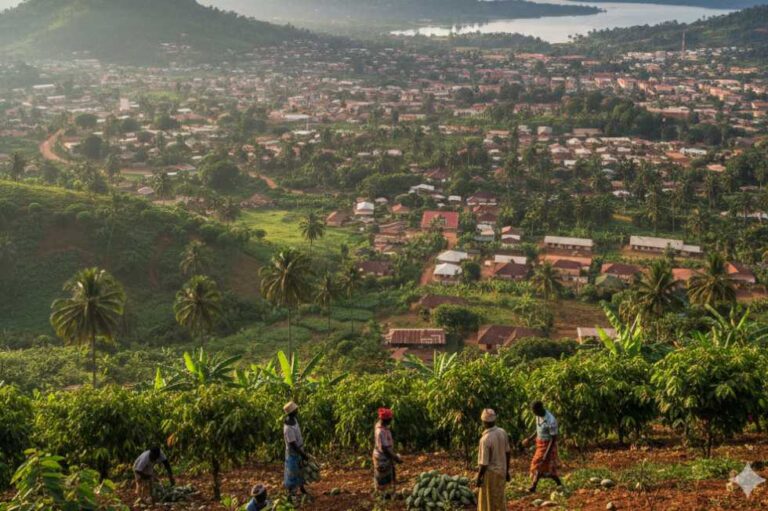
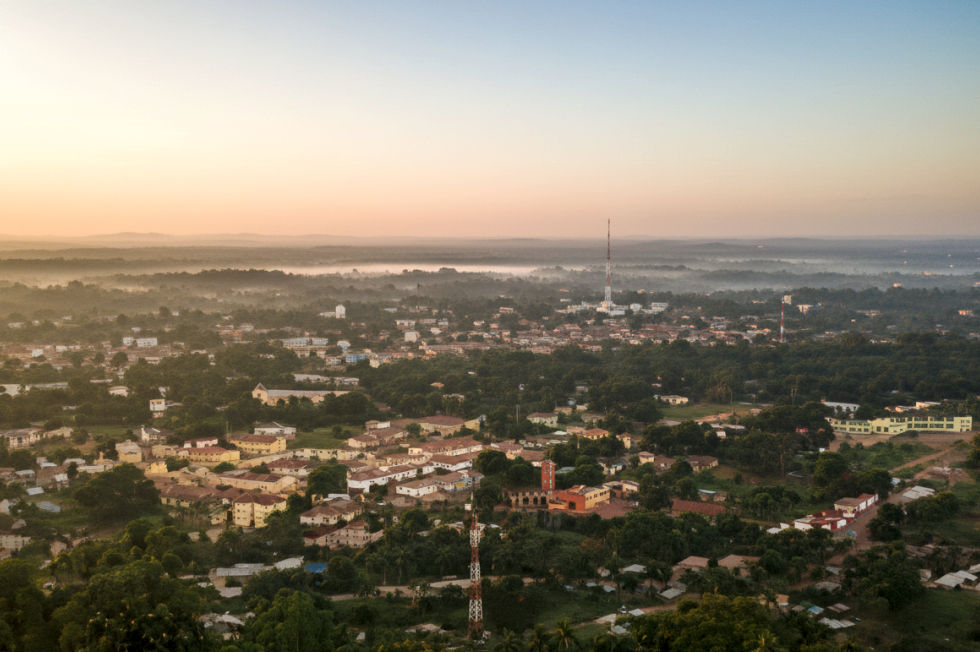
Ho is the capital of Volta Region of Ghana. The city is centrally located between Mount Adaklu and the Mount Galenukui (Togo Atakora Range). Ho is home to notable institutions such as the Volta Regional Museum, major religious centers, and key administrative facilities.
According to the 2010 Population and Housing Census, Ho Municipality had a population of 177,281, representing 8.4% of the Volta Region’s total population. Subsequent national census data recorded the population at 180,420, with approximately 62% residing in urban areas. Females constitute 52.7% of the population, while males make up 47.3%.
Ho Municipality shares boundaries with Adaklu and Agotime-Ziope Districts to the south, Ho West District to the north and west, and the Republic of Togo to the east. The municipality covers a total land area of 2,361 square kilometres, accounting for about 11.5% of the Volta Region’s landmass.
History
Ho was part of German Togoland until the end of World War I, after which it came under British administration. It later served as the capital of British Togoland, a League of Nations mandate, before being incorporated into the Gold Coast, which became modern-day Ghana.
The earliest settlers of Ho were the people of Hegbe (now Heve), followed by the Banakoe (now Bankoe) people. These groups coexisted as separate chiefdoms. The first known chief of Bankoe was Afede Asor I (Akorli), while Anikpi I (Amexo Doh) led the Heve people. Later settlers, including Ahoe and Dome, played significant roles in the town’s development. The Dome people, of Akan origin, formed the ruling class until modern chieftaincy authority was transferred to the Bankoe people. The Hliha people are a subgroup of the Bankoe.
Culture
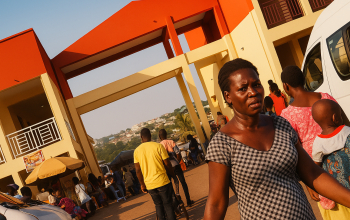
The principal traditional festival celebrated in Ho is the Asogli Yam Festival, held annually around September. The city hosts a large and vibrant central market, which attracts traders and visitors from across the Volta Region and neighboring Togo.
Ho is a major religious center with numerous churches, including the Cathedral of the Roman Catholic Diocese of Ho. The Evangelical Presbyterian Church of Ghana has its national headquarters in the city. Ho is also home to the University of Health and Allied Sciences (UHAS), established in 2015.
Climate
Ho experiences a tropical savanna climate (Köppen Aw), characterized by distinct wet and dry seasons. Temperatures are generally high throughout the year, with mean annual temperatures ranging from 16.5°C to 37.8°C. Average monthly temperatures typically fall between 22°C and 32°C.
Annual rainfall varies between 1,168 mm and 2,103 mm. The rainy season usually occurs from March to June, while the dry season spans July to November. Average relative humidity can reach up to 80%.
Sports
The city is served by the Ho Sports Stadium, which hosts sporting and community events.
Transportation
Roads within central Ho are largely paved, while many roads on the outskirts remain unpaved. The Ho Airport was completed in 2017 and officially opened for commercial operations in 2021, improving air connectivity for the municipality.
Health
Ho has a well-developed healthcare system. Primary healthcare services are provided by the Ho Polyclinic, while secondary care is available at the Ho Municipal Hospital. The Ho Teaching Hospital, established in 1999, serves as a tertiary referral center and is affiliated with the University of Health and Allied Sciences. It provides healthcare services to patients from Ghana as well as neighboring countries such as Togo, Benin, and Nigeria.
Education
Ho hosts numerous public and private basic schools, as well as a wide range of secondary and tertiary institutions.
Tertiary Institutions
- University of Health and Allied Sciences (UHAS)
- Ho Technical University (formerly Ho Polytechnic)
- Ghana Technology University College
- Princefield University College
- Evangelical Presbyterian University College
- Ho Nurses Training Schools (Community Health & RGN)
- Ho School of Hygiene
- DataLink Institute, Ho
- GCom Institute of Science and Technology
Secondary Institutions
- Mawuli School
- EPC Mawuko Girls Senior High School
- OLA Girls’ Senior High School
- Sacred Heart Senior High School
- Sonrise Christian High School
- St. Prosper’s College
- Wallahs Academy
- Holy Spirit College of Education
Administration
The Ho Municipal Assembly is one of the 25 administrative districts in the Volta Region. As of 2017, the municipality had an estimated population of 213,960, comprising 105,195 males and 108,765 females. Ho serves as both the municipal and regional capital.
The municipality includes several towns and villages, with approximately 134,795 residents living in urban areas and 79,165 in rural communities. There are about 49,826 households, with an average household size of four persons.